Beauty, nail & salon
Nitrile gloves for beauty and nail professionals
Task-based glove guidance for nail services, hair color, waxing, esthetics and salon cleanup—with clear boundaries for acetone, disinfectants, ventilation and UV-specific products.

Common workflows
Plan glove use around the actual work.
Nail, hair, waxing, facial and cleanup work create different client, chemical and hygiene boundaries. Fit supports precision, but the exact product and exposure determine protection.
Nail services
Use close-fitting gloves for approved client-contact and setup steps, with a fresh pair at defined clean-to-used transitions. Keep phones, drawers and clean tools outside the used-glove path.
Hair color & waxing
Color formulas, lighteners, waxes and treatment products differ. Match the exact glove to the product label, SDS, contact time and employer procedure instead of relying on color or mil alone.
Tools & client changes
Discard single-use gloves between clients and process reusable tools under state rules and disinfectant directions. A UV box does not replace required cleaning and disinfection.
Acetone, UV & ventilation
Do not assume nitrile is suitable for acetone or provides UV protection. Keep local exhaust operating and select chemical or UV-specific protection from authoritative instructions.
Selection guide
Build a specification your team can follow.
A useful glove program is specific enough for employees and purchasing teams to repeat. Start with four decisions, then confirm the safety boundary for each substance and task.
Thickness
Compare 4–6 mil for routine precision and frequent-change salon tasks, then validate tear rate and fit. Thickness does not establish acetone compatibility, UV protection or disinfectant suitability.
Fit & texture
Close fit supports nail tools, brushes and detailed services without baggy fingertips or excessive tension. Trial every technician size and replace a glove as soon as its barrier condition changes.
Color & process control
Black can hide salon stains and purple can support visual task separation. Neither color proves barrier quality, chemical compatibility or UV protection.
Pack plan
Estimate by technicians, service mix, required changes per appointment and size. Separate routine service stock from chemical-transfer and tool-processing PPE.
Related operating guides
Go deeper into the workflow.
Use these guides to define task boundaries, glove-change points and purchasing inputs before selecting a product.
 Glove guide
Nail Salon Glove Changes: A Task-Based Hygiene Guide
Glove guide
Nail Salon Glove Changes: A Task-Based Hygiene Guide
Map clean-to-used transitions, client changes, tool processing and chemical-task boundaries across a professional nail salon.
Read the guide Glove guide
Beauty Salon Gloves: Nail, Hair, Waxing & Chemical Limits
Glove guide
Beauty Salon Gloves: Nail, Hair, Waxing & Chemical Limits
Choose disposable gloves across nail, hair, waxing, facial and cleanup tasks without assuming acetone resistance or UV protection.
Read the guideRecommended starting points
Compare UYKKE options for the work.
These products are practical starting points—not blanket approvals for an entire industry. Compare fit, thickness, texture, pack format and current availability, then confirm product-specific suitability before use.
Why UYKKE
Factory-direct value, proven in the market.
UYKKE gloves are produced directly with one of China’s leading manufacturers of medical and protective products—without an added trading intermediary—for consistent quality, responsive supply and competitive case pricing.
Manufacturing capability is not a medical-grade or hazard claim for every SKU. Confirm the exact product documentation and task requirements.
-
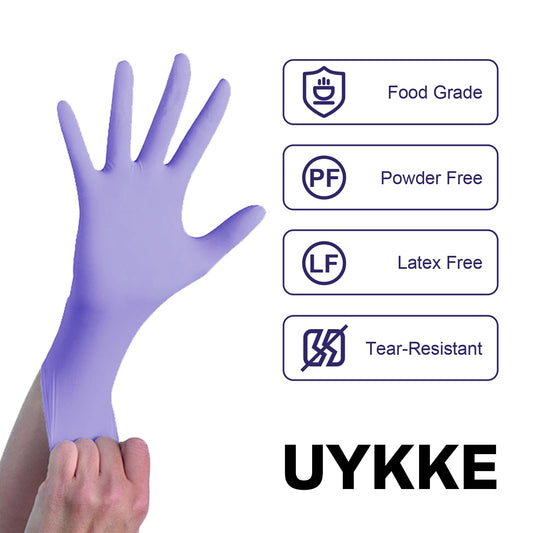
UYKKE 4 Mil Purple Nitrile Gloves — 2000 Count
Regular price $99.99 USDRegular price View on Amazon
-
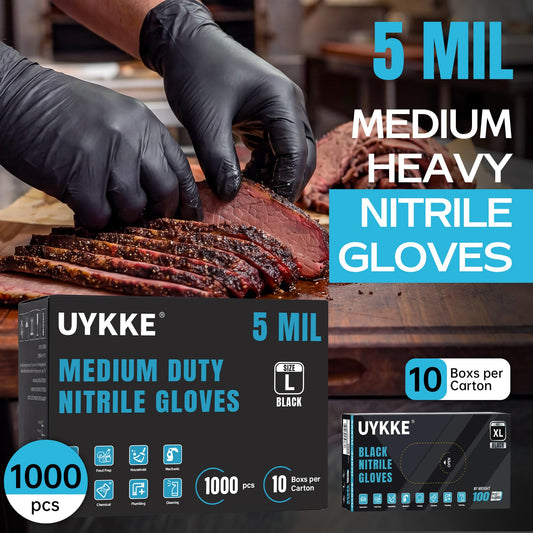
UYKKE 5 Mil Black Nitrile Gloves — 1000 Count
Regular price From $71.96 USDRegular price -
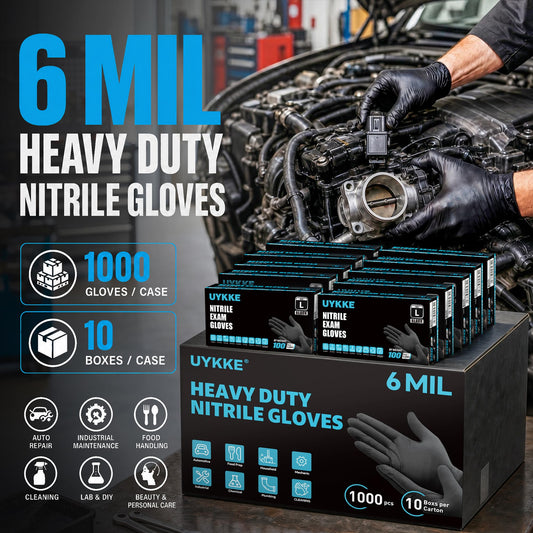
UYKKE 6 Mil Black Nitrile Gloves — 1000 Count
Regular price From $81.96 USDRegular price




Supply planning
Keep the right glove available at the right station.
Start with a simple monthly baseline: employees per shift × pairs per employee × operating days. Then add task changes, multiple shifts, seasonal peaks and reserve stock. Track usage by size and glove type, not only by total cases.
For salons, forecast by technician, appointment mix, glove changes per service and size. Keep routine client-work stock separate from products approved for chemical transfer, tool processing or other specialized tasks.
Industry FAQ
Practical questions before you standardize a glove
What glove thickness is a practical starting point for nail and beauty work?
Compare 4–6 mil products for routine precision and frequent-change tasks, then validate fit and tear rate with actual technicians. Thickness does not establish chemical or UV protection.
Are nitrile gloves resistant to acetone?
Do not assume so. OSHA distinguishes acetone from many other nail-product chemicals and notes that latex or vinyl may be appropriate for acetone. Select from the exact product label, SDS, contact time and glove compatibility data, while accounting for latex-allergy concerns.
Can disposable nitrile gloves be used as UV gloves for gel manicures?
No UV-protection claim should be inferred. Dark opaque fingertip-free UV gloves are a different product type; disposable nitrile gloves are not automatically tested or rated for that purpose.
When should salon gloves be changed?
Change them between clients and whenever torn, punctured, contaminated or required by the salon procedure. Remove used gloves before touching phones, clean drawers or shared controls.
Do gloves replace nail salon ventilation?
No. Gloves address skin contact only. Local exhaust and general ventilation are central controls for vapors and dust, along with closed containers and safe work practices.
Can one glove cover nail services, hair color, waxing and disinfectant cleanup?
Not by default. Map the exact products, contact time, heat, sharps and hygiene requirements for each task and approve glove specifications separately.