Automotive & mechanic
Nitrile gloves for automotive work
Task-based glove recommendations for repair shops, technicians, detailers and maintenance teams working around grease, oil, parts and frequent glove changes.

Choose for the task
One workplace. Different glove demands.
Automotive work moves from electrical connectors and small fasteners to oily filters, abrasive suspension parts, chemicals and hot components. A glove that feels right for diagnostics may be wasteful—or unsuitable—for brake service, solvent use or heavy cleanup.
Build the shop standard around task duration, grip, tear rate and exact fluid exposure. Disposable nitrile is useful for many routine jobs, but it is not cut-, impact-, electrical- or heat-protective PPE and is not compatible with every shop chemical.
Common workflows
Plan glove use around the actual work.
Different steps create different demands. Use these workflow examples to define glove-change points, select a practical starting thickness and identify tasks that need a separate PPE review.
Inspection & diagnostics
Electrical connectors, clips and fasteners reward fingertip control. A thinner close-fitting glove can be more useful than a bulky option during scan-tool work and visual inspection.
Oil, grease & filters
Textured fingers and palms can support grip on oily parts. Longer jobs or frequent snagging may justify a 7–10 mil option, provided the glove remains appropriate for the substances involved.
Brakes, wheels & suspension
Dirty, abrasive components increase mechanical stress on disposable gloves. Keep replacements within reach and change any glove that is torn or punctured; disposable nitrile is not cut- or impact-protective PPE.
Fluids & batteries
Coolant, brake products, battery chemicals and shop solvents have different hazards. Check the product label and SDS, then select glove material and breakthrough performance for the actual exposure.
Detailing & paint prep
Frequent-change tasks benefit from easy donning, accurate sizing and case-level supply. Confirm compatibility before handling wheel cleaners, coatings, degreasers or paint-system chemicals.
Cleanup & waste handling
Separate routine wipe-down work from sharp parts, hot components and unknown spills. Those hazards may require reusable chemical gloves, cut protection or other task-specific PPE.
Selection guide
Build a specification your team can follow.
A useful glove program is specific enough for employees and purchasing teams to repeat. Start with four decisions, then confirm the safety boundary for each substance and task.
Thickness
Use 5–7 mil for inspection and light service; consider 8–10 mil for longer, dirtier mechanical work. Thickness may improve durability, but does not prove chemical, cut or heat protection.
Fit & texture
Raised texture can support grip on oily parts. Correct sizing reduces loose fingertips around fasteners and excessive hand tension during longer repair work.
Color & process control
Black hides grease; orange improves visibility in a busy bay. Color can support task separation, but it is not evidence of thickness or protection level.
Pack plan
Estimate by technicians, repair order mix and pairs per billed day. Separate quick-use boxes from heavier-duty stock so the thickest glove is not consumed for every task.
| Task profile | Prioritize | Practical starting point | Check before use |
|---|---|---|---|
| Diagnostics and light service | Fingertip control and easy changes | 5–7 mil close-fitting nitrile | Electrical, heat and moving-equipment hazards |
| Greasy components and longer repairs | Texture and mechanical durability | 7–10 mil textured nitrile | Actual fluid and chemical exposure |
| Solvents, batteries and aggressive cleaners | Material and breakthrough performance | Task-specific chemical glove | Product label, SDS and manufacturer data |
Recommended starting points
Compare UYKKE options for the work.
These products are practical starting points—not blanket approvals for an entire industry. Compare fit, thickness, texture, pack format and current availability, then confirm product-specific suitability before use.
-
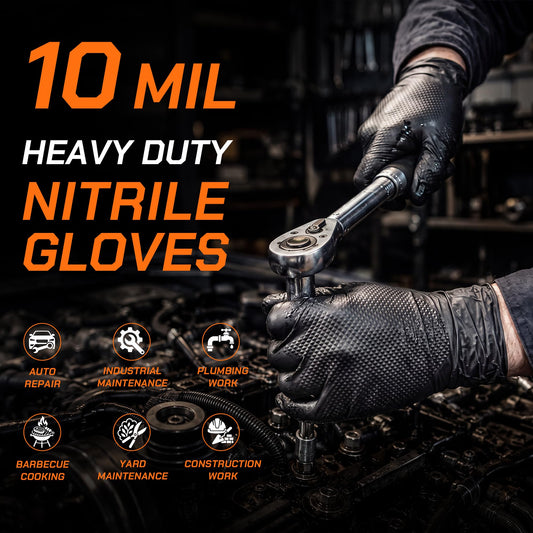
UYKKE 10 Mil Black / Orange Nitrile Gloves — 100 / 1000 Count
Regular price From $23.96 USDRegular price View on Amazon
Sold out
View on Amazon
Sold out -
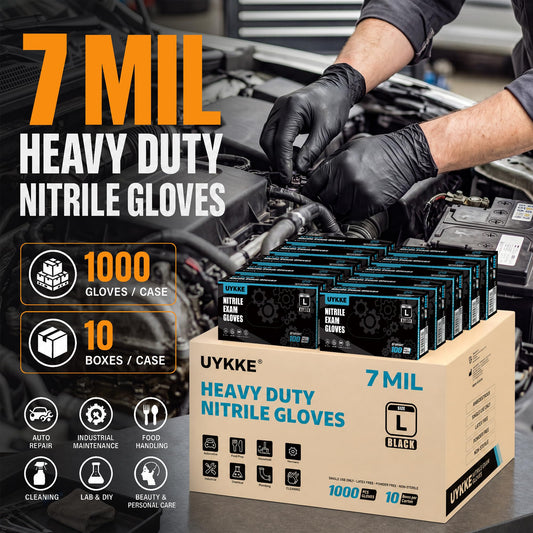
UYKKE 7 Mil Black Nitrile Gloves — 1000 Count
Regular price From $96.96 USDRegular price -
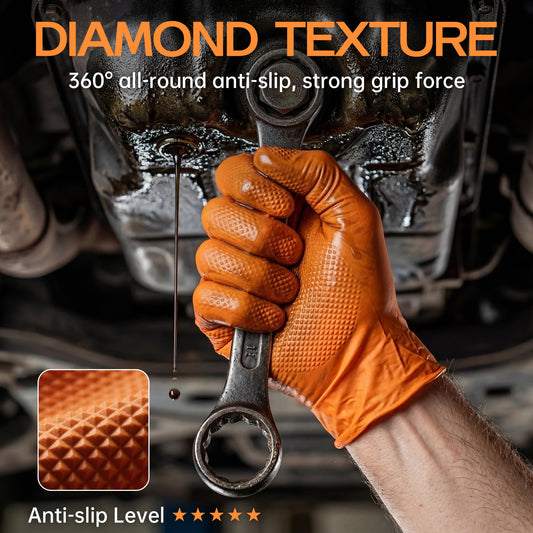
UYKKE SuSwel Series 8 Mil Orange Nitrile Gloves — 1000 Count
Regular price From $119.98 USDRegular price




Supply planning
Keep the right glove available at the right station.
Start with a simple monthly baseline: employees per shift × pairs per employee × operating days. Then add task changes, multiple shifts, seasonal peaks and reserve stock. Track usage by size and glove type, not only by total cases.
For repair shops, compare glove use with technician count and repair-order mix. Unexpected consumption can point to poor sizing, excessive snagging or employees using a heavy-duty glove for light inspection work.
Define the approved tasks
Write down where each glove may be used, where it must be changed and which hazards require a different product.
Stock the real size mix
Use employee size data and consumption history. Oversized and undersized gloves reduce control and can drive avoidable waste.
Set a reorder point
Include supplier lead time, peak demand and reserve stock. Review unusual usage as an operating signal instead of automatically increasing the order.
Industry FAQ
Practical questions before you standardize a glove
What thickness is a good starting point for mechanics?
For inspection, diagnostics and light service, 5–7 mil often balances dexterity and durability. For longer greasy or abrasive tasks, a textured 7–10 mil option may reduce tear frequency. Validate the choice against the actual job.
Are thicker mechanic gloves always safer?
No. Thickness can improve mechanical durability but does not prove chemical, cut, heat, impact or electrical protection. The hazard, substance and exposure time determine the required glove.
Do textured nitrile gloves help with oily parts?
Raised texture can support grip on wet or greasy parts, tools and filters. It does not eliminate the need to control spills, clean tools or replace a compromised glove.
Can disposable nitrile gloves be used with brake cleaner or solvents?
Not by default. Solvent formulations vary and some can permeate nitrile quickly. Review the chemical label, SDS and compatibility data for the exact glove; use a different chemical glove when required.
Are disposable nitrile gloves cut- or heat-resistant?
No. They are not a substitute for cut-resistant, impact, welding, electrical or heat-protective gloves. Do not use them around hot components or sharp edges as the only protection.
Why offer both black and orange mechanic gloves?
Black suits grease-heavy work and a familiar shop look; orange improves visibility in a busy bay. Color can also separate light-duty and heavier-duty stock, but should never be used as the only specification.
How should a repair shop plan glove inventory?
Forecast by technicians, pairs per workday and repair-order mix. Track sizes separately, place boxes near bays and keep a distinct heavier-duty option for jobs that actually need it.
Does UYKKE offer case pricing for repair shops?
Yes. Submit the wholesale request form with team size, preferred thicknesses, sizes and monthly usage. Sample discussions are handled directly with sales.
Business supply
Need help matching the glove to the job?
Tell us the application, sizes, preferred thickness and estimated volume. We can discuss U.S. inventory, wholesale pricing, sample availability and private label.