Organic growing & greenhouse
Nitrile gloves for organic growing work
Task-based glove guidance for crop handling, harvest, propagation, greenhouse resets and sanitation—kept distinct from cannabis cultivation and grounded in organic control points.

Common workflows
Plan glove use around the actual work.
Propagation, crop handling, harvest, packing and greenhouse reset create different hygiene boundaries. Organic status does not make one glove suitable for every task.
Propagation & transplanting
Close-fitting gloves can support seedling trays, labels and delicate roots. Keep clean propagation supplies separate from used pots, soil residue and waste.
Crop care & harvest
Define glove changes between crop blocks, diseased material, tools and harvested produce. Organic certification does not make glove material or color a protection rating.
Produce handling & packing
Use the correct size and product-specific food-contact documentation where required. Protect clean glove boxes from soil, splash and packing-line traffic.
Greenhouse reset & inputs
Map debris removal, tray cleaning, irrigation checks and release records. Pesticide work must follow the label and EPA Worker Protection Standard requirements.
Selection guide
Build a specification your team can follow.
A useful glove program is specific enough for employees and purchasing teams to repeat. Start with four decisions, then confirm the safety boundary for each substance and task.
Thickness
Start around 5–6 mil for frequent-change crop handling and propagation; consider 7 mil when validated harvest or cleanup work creates more wear. Thickness does not determine pesticide or chemical suitability.
Fit & texture
A close fit supports seedlings, labels, harvest tools and packing tasks. Test the actual size mix and change heavily soiled or compromised disposable gloves.
Color & process control
Color can distinguish propagation, harvest, packing and sanitation zones when the meaning is documented. It does not establish organic compliance or chemical resistance.
Pack plan
Forecast by crop crew, pairs per shift, harvest peaks and reset cycles. Track produce-handling and sanitation stock separately so one task does not consume another task's supply.
Related operating guides
Go deeper into the workflow.
Use these guides to define task boundaries, glove-change points and purchasing inputs before selecting a product.
 Glove guide
Organic Greenhouse & Farm Hygiene: A Task-First Glove Guide
Glove guide
Organic Greenhouse & Farm Hygiene: A Task-First Glove Guide
Match gloves to crop handling, harvest, cleaning and pesticide tasks without confusing organic certification with glove material.
Read the guide Glove guide
Greenhouse Cleanup After Harvest: A Commercial Reset Workflow
Glove guide
Greenhouse Cleanup After Harvest: A Commercial Reset Workflow
A nine-step post-harvest reset covering debris, surfaces, irrigation, reusable containers, coco coir decisions and documented release.
Read the guideRecommended starting points
Compare UYKKE options for the work.
These products are practical starting points—not blanket approvals for an entire industry. Compare fit, thickness, texture, pack format and current availability, then confirm product-specific suitability before use.
Why UYKKE
Factory-direct value, proven in the market.
UYKKE gloves are produced directly with one of China’s leading manufacturers of medical and protective products—without an added trading intermediary—for consistent quality, responsive supply and competitive case pricing.
Manufacturing capability is not a medical-grade or hazard claim for every SKU. Confirm the exact product documentation and task requirements.
-
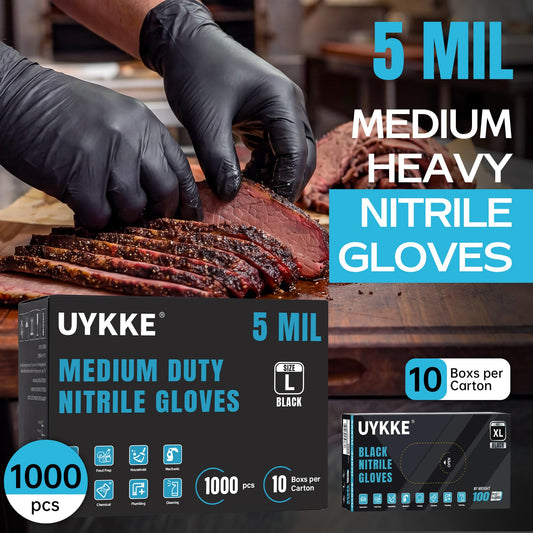
UYKKE 5 Mil Black Nitrile Gloves — 1000 Count
Regular price From $71.96 USDRegular price View on Amazon
-
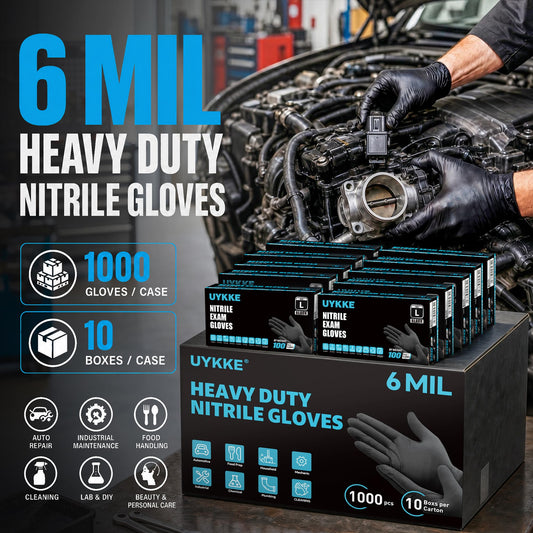
UYKKE 6 Mil Black Nitrile Gloves — 1000 Count
Regular price From $81.96 USDRegular price -
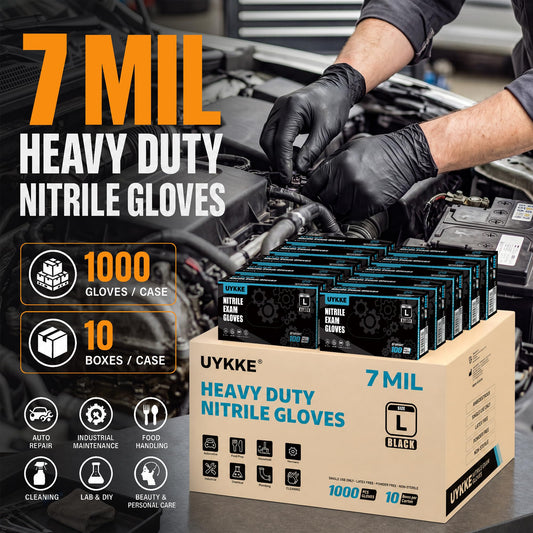
UYKKE 7 Mil Black Nitrile Gloves — 1000 Count
Regular price From $96.96 USDRegular price




Supply planning
Keep the right glove available at the right station.
Start with a simple monthly baseline: employees per shift × pairs per employee × operating days. Then add task changes, multiple shifts, seasonal peaks and reserve stock. Track usage by size and glove type, not only by total cases.
For organic farms and greenhouses, model propagation, harvest and post-harvest cleanup separately. Track sizes and pairs by crop crew, and keep pesticide-handler PPE tied to the exact label rather than the routine crop-handling glove.
Industry FAQ
Practical questions before you standardize a glove
Does an organic farm need an “organic” glove?
Organic certification applies to the production system and its controls; it does not make glove color or material an organic rating. The operation should document how gloves fit its Organic System Plan and contamination controls.
What thickness works for crop handling and harvest?
Many teams can start around 5–6 mil for frequent-change produce and propagation work, then consider 7 mil where validated tasks create more wear. Fit and the actual job remain more important than the biggest mil number.
Can routine crop-handling gloves be used for pesticides?
Do not assume so. Agricultural pesticide handlers must follow the pesticide label and applicable EPA Worker Protection Standard requirements, including the specified PPE.
When should greenhouse gloves be changed?
Change damaged, contaminated or heavily soiled disposable gloves and at documented transitions between crop blocks, diseased material, harvest, packing and sanitation.
Can glove color support organic control points?
Yes, when a written process uses colors to distinguish propagation, harvest, sanitation or organic and non-organic areas. Color alone does not prevent commingling or contamination.
Should disposable gloves be washed and reused?
No. Remove and discard single-use gloves at the required change point, perform hand hygiene and don a fresh pair for the next task.